


5 Common Mistakes to Avoid When Importing Combine Harvester Parts from India
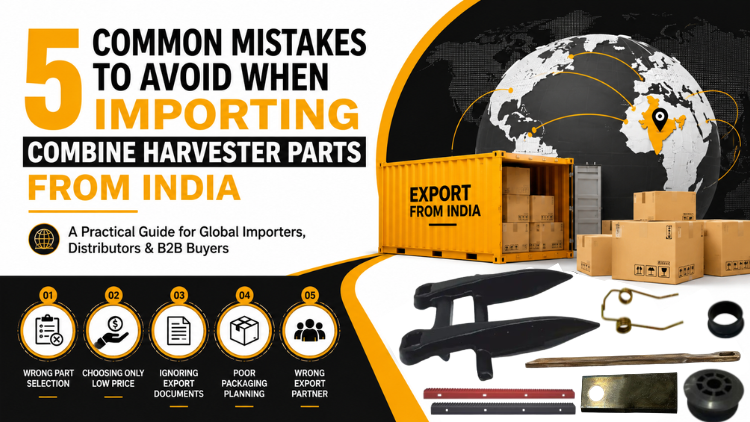
A Practical Guide for Global Importers, Distributors & B2B Buyers
If you're importing combine harvester parts from India, finding a reliable supplier is only the first step. The real challenge is making sure the right parts arrive on time, in the right condition, and with the correct documentation.
A small mistake during the sourcing process, such as ordering the wrong specifications, overlooking shipping documents, or ignoring packaging requirements, can lead to delays, additional costs, and unnecessary disruptions.
The good news is that most of these issues are easy to avoid with the right planning. In this guide, we'll walk through the five common mistakes importers make when sourcing combine harvester parts from India and share practical tips to help you build a smoother and more reliable procurement process.
Common Mistakes When Importing Combine Harvester Parts
The biggest mistakes include ordering incompatible parts, choosing suppliers based only on price, overlooking export documents, ignoring packaging quality, and selecting inexperienced export partners. Avoiding these issues helps ensure a smoother and more reliable importing process.
Quick Checklist of Common Mistakes
Here's a quick checklist to help you avoid the most common importing mistakes before placing your order.
Common Mistake | What to Do Instead |
Ordering the wrong parts | Verify OEM numbers, specifications, and machine compatibility. |
Choosing the lowest price | Compare product quality, durability, and supplier reliability. |
Ignoring export documentation | Review invoices, packing lists, HS codes, and shipping documents before dispatch. |
Overlooking packaging | Confirm export-grade packaging with anti-rust and transit protection. |
Choosing the wrong export partner | Work with an experienced exporter that offers reliable quality and support. |
1. Ordering the Wrong Parts
Ordering the wrong part is one of the most common importing mistakes. Even components that look similar can differ in size, dimensions, fitment, or machine compatibility, which can affect installation and performance. Before placing an order, always verify the technical details with your supplier. A little extra verification today can save time, money, and unnecessary delays later.
Before Ordering, Check:
OEM part number and machine model
Technical drawings or reference images
Part dimensions and compatibility
2. Choosing Price Over Quality
Getting a competitive price is important, but the cheapest option isn't always the best investment. Low-quality parts may wear out faster, leading to additional replacement costs and machine downtime during the harvesting season.
Instead of focusing only on price, compare the overall value a supplier offers.
Compare These Factors:
Material quality and durability
Quality inspection standards
Consistent product performance
3. Ignoring Export Documentation
Even a small documentation error can delay customs clearance and disrupt your delivery schedule. Reviewing export paperwork before dispatch helps avoid unnecessary complications.
A quick document check is far easier than correcting paperwork after the shipment has left India.
Before Shipment, Verify:
Commercial invoice and packing list
Product details and HS code
Shipping documents and quantities
4. Overlooking Export Packaging
International shipments often spend weeks in transit. Without proper packaging, parts may be exposed to moisture, corrosion, or handling damage before they reach your warehouse.
Discuss packaging requirements with your supplier before the shipment is dispatched.
Packaging Checklist:
Export-grade protective packaging
Anti-rust and moisture protection
Secure packing for safe transportation
5. Choosing the Wrong Export Partner
A reliable supplier does more than provide products. They help manage specifications, documentation, communication, and timely deliveries throughout the sourcing process.
Choosing an experienced export partner helps reduce risks and build a stronger long-term supply chain.
Choose a Supplier That Offers:
Export experience and product expertise
Responsive communication and support
Consistent quality and reliable supply
How to Import Combine Harvester Parts Successfully from India?
Importing combine harvester parts is easier when you follow a structured sourcing process. Careful planning helps reduce risks and keeps your supply chain running smoothly.
Confirm the OEM number, machine model, and part specifications.
Choose a supplier based on quality, experience, and reliability.
Review product quality, packaging, and export documents before shipment.
Build a long-term relationship with a trusted export partner.
Why Many Global Buyers Source Combine Harvester Parts from India
India has become a trusted sourcing destination for combine harvester parts because it offers a wide product range, experienced exporters, competitive pricing, and reliable supply support for global buyers.
Wide range of combine harvester replacement parts
Experienced exporters serving global markets
Competitive pricing with dependable quality
Reliable supply support for importers and distributors
Conclusion
Importing combine harvester parts from India doesn't have to be complicated. By verifying specifications, reviewing documentation, choosing a reliable supplier, and planning shipments carefully, you can reduce sourcing risks and build a dependable supply chain for long-term success.
Frequently Asked Questions
What should I check before importing combine harvester parts from India?
Start by confirming OEM numbers, technical specifications, machine compatibility, product quality, packaging methods, and export documentation. Reviewing these details before placing an order helps avoid unnecessary delays and incorrect shipments.
Why is machine compatibility so important?
Even parts that appear similar may have different dimensions or mounting specifications. Verifying compatibility before ordering helps prevent installation issues and additional replacement costs.
Is choosing the lowest-priced supplier always a good idea?
Not necessarily. Price is important, but it should be considered alongside product quality, consistency, export experience, and after-sales support. A slightly higher-quality product often provides better long-term value.
How can I reduce the risk of shipment delays?
Most delays can be avoided by reviewing documentation before dispatch, confirming product specifications, and working with suppliers who have experience handling international shipments.
Why does export packaging matter for combine harvester parts?
International shipments may spend several weeks in transit. Proper export packaging helps protect parts from moisture, corrosion, handling damage, and other transportation risks, ensuring they arrive in good condition.
How do I choose a reliable combine harvester parts exporter from India?
Look beyond the product catalogue. Evaluate the supplier's export experience, communication, consistency, quality practices, and ability to support long-term business requirements. A reliable partner should make the sourcing process easier, not more complicated.


Comments